EDT vs EDP vs Extrait de Parfum: what is the difference?
The real difference between EDT, EDP and extrait is the fragrance oil concentration. We compare the three side by side on concentration, longevity, sillage and when to choose each, with 50 ml amounts for making each at home.
The difference is the concentration
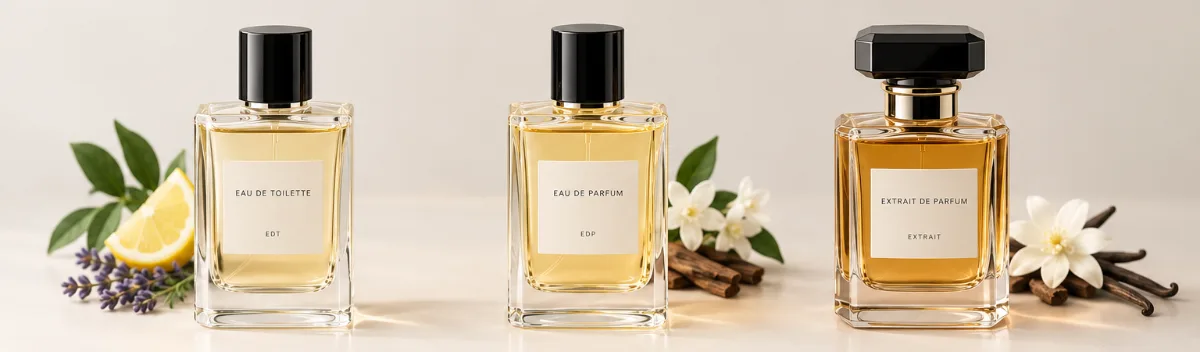
EDT, EDP and extrait de parfum are usually described as the same scent at different strengths. What sets the name is the fragrance oil concentration in the mixture: EDT has the least oil, extrait the most. These bands are industry conventions rather than legal definitions, so one brand's EDP can sit close to another brand's EDT. Cologne (EDC, 2–5%) sits at the lighter end; this article focuses on the three types people mix up most often.
Side by side
| EDT | EDP | Extrait de Parfum | |
|---|---|---|---|
| Typical concentration | 5–15% | 15–20% | 20–40% |
| Rough longevity | 3–4 hours | 5–8 hours | 8 hours and up |
| Sillage | Noticeable in the first hours | Moderate | Usually close to the skin |
| Alcohol share | Highest | Medium | Lowest |
| Oil cost per bottle | Lowest | Medium | Highest |
EDT: light and fresh
With less oil and more alcohol, an EDT opens lighter and projects quickly in the first minutes. Fresh compositions built on citrus and aromatic notes are often made as EDTs. You may need to reapply during the day; in exchange, the same bottle of oil stretches to more bottles of perfume.
EDP: between longevity and intensity
EDP sits in the middle, between longevity and intensity. The 18–20% range many home perfumers use falls right here. If you are trying an oil for the first time, it is a good starting point for judging how strong that oil is.
Extrait de Parfum: the most concentrated
An extrait has the highest oil concentration and the lowest alcohol share. It usually wears closer to the skin but lasts longer. Before going that high, check the oil's IFRA limit: if the limit in its documentation is below 20%, you cannot make an extrait with that oil. More in IFRA limits explained.
Is the EDT of a perfume the same scent as its EDP?
Often not. Brands can develop the EDT and EDP of the same name as separate formulas, with a different balance of notes and sometimes different notes altogether. At home you usually work with a single oil, so the only difference between your EDT and EDP is the concentration. That lets you capture part of the gap between the two originals, but not all of it.
All three in a 50 ml bottle
If you want to try all three with the same oil, here are the amounts for a 50 ml bottle at one concentration from each band:
| Concentration | Oil (ml) | Oil (g) | Base (ml) | Base (g) |
|---|---|---|---|---|
| 12% | 6 | 5.7 | 44 | 34.76 |
| 18% | 9 | 8.55 | 41 | 32.39 |
| 25% | 12.5 | 11.88 | 37.5 | 29.63 |
To work it out for your own bottle size and concentration:
Calculate your perfumeWhich one should you make?
- For a fresh, summery scent, the EDT range may be enough, and your oil cost goes down.
- For everyday wear with balanced longevity, start in the EDP range. If it still does not last long enough after a few weeks of rest, raise the concentration a few points.
- For a long-lasting scent that stays close to the skin, you can go up to extrait; check the oil's IFRA limit first.
- If you sell your perfume, stating the type on the label and using the same concentration in every batch keeps customer expectations steady. Keeping that consistent starts with recording your formulas.